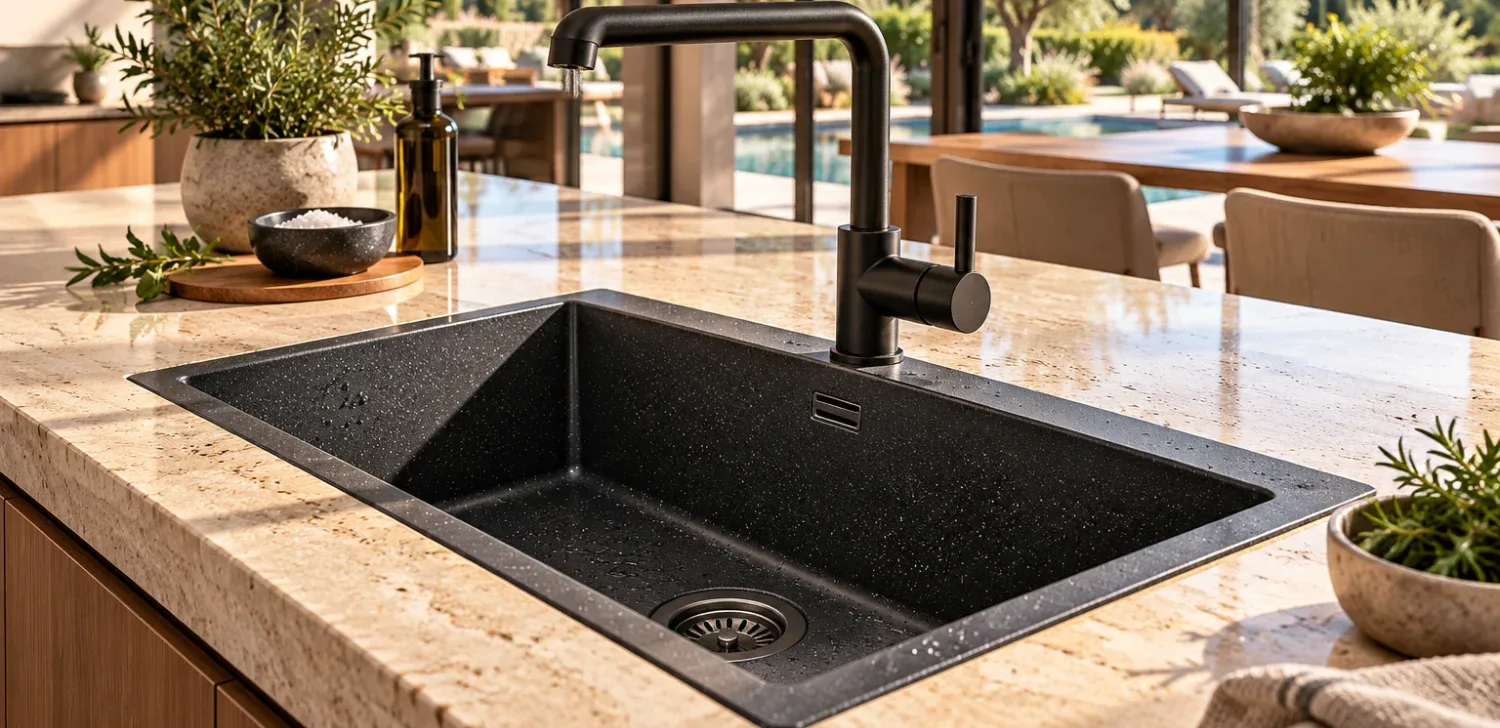
A granite sink is a composite sink made from approximately 80% quartz sand and 20% acrylic resin. We explain how it is made, its advantages, how it differs from stainless steel and how to care for it properly.
Short answer: A granite sink is not carved from a block of natural granite; it is a composite sink made by mixing approximately 80% quartz sand (or granite powder) with 20% acrylic resin and curing the mixture in a mould. Thanks to its stone look, matte texture and resistance to scratches and stains, it is one of the most popular sink types in modern kitchens.
How is a composite granite sink made?
- Raw material preparation: Quartz sand of a specific grain size, acrylic resin and colour pigments are weighed out in precise proportions.
- Mixing: The materials are mixed under vacuum to remove air bubbles. This is critical for achieving a non-porous, homogeneous structure.
- Casting and moulding: The mixture is poured into sink-shaped moulds.
- Curing: The mould is heated to polymerise the resin, which binds the quartz grains firmly together.
- Demoulding and finishing: The sink is removed from the mould, its edges and holes are machined, and its surface is inspected.
The colour comes from pigments added to the mixture, so it runs through the entire mass; even if the surface gets scratched, no different colour shows through underneath.
What are the advantages of a granite sink?
- Non-porous, hygienic surface: Unlike natural granite, it does not absorb moisture.
- Scratch and impact resistance: Its high quartz content helps the surface hold up well to everyday use.
- Heat resistance: It withstands the hot water and hot cookware of everyday use; still, it is best not to place very hot pots straight from the stove directly on the surface.
- Quiet in use: Its solid structure dampens the noise of running water and dishes.
- Colour and design: Options such as black, anthracite, grey, beige and white make it easy to match your countertop.
Granite sink or stainless steel sink?
| Composite Granite | Stainless Steel (304) | |
|---|---|---|
| Appearance | Matte, stone-like texture | Metallic; satin or polished |
| Noise | Quieter | Reduced by an underside coating |
| Scratching | Resistant | Fine scratches may appear with use |
| Weight | Heavier | Lighter |
| Care | Regular wiping to prevent limescale stains | Easy to clean |
How do you clean a granite sink?
- For daily cleaning, lukewarm water, a soft sponge and a mild liquid detergent are all you need.
- Drying the surface after use prevents limescale marks, especially on dark colours.
- For limescale stains, you can use diluted vinegar or a cleaner recommended by the manufacturer; then rinse thoroughly with plenty of water.
- Avoid steel wool, abrasive powders and harsh chemicals such as concentrated bleach.
Frequently asked questions
Is a granite sink made of natural stone?
No. Although it is sold under the name "granite sink", it is a composite material made largely of quartz sand and resin.
Does a black granite sink turn white?
White-looking marks are usually caused by limescale from the water. Drying the surface after use and removing limescale regularly prevents this.
Which countertops is a granite sink compatible with?
It can be used with laminate, wood, quartz and natural stone countertops alike; most models are suitable for inset (drop-in) installation.
You can explore the Ekosan Evye granite series on our products page and contact us about your projects.